In the face of growing environmental challenges, the construction sector—and the roofing industry in particular—plays a central role in reducing greenhouse gas (GHG) emissions. Traditionally, the materials and techniques used have contributed to a significant carbon footprint.
Today, the emergence of green technologies, materials with low environmental impact, and innovative maintenance models is paving the way for a profound transformation of the sector. Decarbonizing the roofing industry is no longer an option—it has become a strategic lever for supporting the energy transition and building a sustainable future.
Why Decarbonization Is Crucial for the Roofing Industry
A building’s roof is not just a means of protection against the elements: it directly affects the building’s energy performance and its overall carbon footprint.
In a country like Canada, where weather conditions vary greatly from one region to another, energy efficiency and the sustainability of roofs are major issues.
However, decarbonizing the sector is not limited to extending the lifespan of roofs. In fact, to generate actual carbon credits or achieve tangible reductions in emissions, action must be taken on renovation projects and the choice of materials.
Traditional materials such as asphalt, metal, or ceramics are often derived from non-renewable resources and generate significant emissions during their manufacture. Conversely, using low-carbon-footprint materials—whether recycled, recyclable, or locally produced—directly reduces the environmental impact of each project.
Thus, decarbonization requires both:
- sustainable renovation projects that incorporate eco-friendly materials;
- a careful selection of low-carbon materials;
- and smart management of the roof’s lifespan, in order to optimize maintenance work without generating unnecessary waste.
An Innovative Approach: Roofing as a Service
At Testudo, we’ve chosen to take a concrete and pragmatic approach to decarbonization through an innovative model: Roofing as a Service.
This model makes it possible to rethink the management of the roof life cycle by integrating energy efficiency, preventive maintenance, and the selection of more sustainable materials.
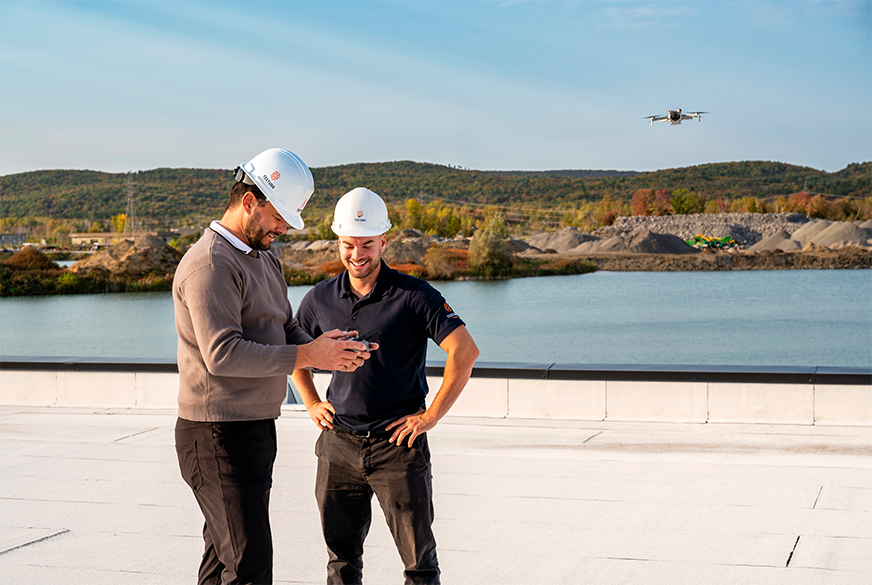
Through regular inspections and scheduled maintenance, we extend the life of roofs and prevent premature replacements, which often result in large amounts of waste and emissions.
Above all, during renovation projects, we prioritize low-carbon materials in order to reduce the roof’s overall life-cycle impact. This approach combines sustainability, energy efficiency, and a real reduction in emissions.
There are many advantages to this approach:
- Selection of low-carbon materials;
- Reduction of waste resulting from premature replacements;
- Optimizing a building’s energy efficiency;
- Improving resilience to weather conditions;
- Contribution to a measurable environmental initiative.
Our Commitment to a Sustainable Future
With our roofing-as-a-service model, Testudo does more than just maintain roofs: we are actively contributing to the transition toward a more responsible roofing industry.
Our goal is clear: to reduce the sector’s carbon footprint through sustainable practices, innovation, and the careful selection of eco-friendly materials.
By combining performance, efficiency, and environmental responsibility, we are helping to lay the foundation for a greener future for the Canadian roofing industry.